
Postcards from the Black Midwest
- Project by
- Jane Henderson
- Pronouns
- she/her
PROJECT STATEMENT
Picture postcards are a Midwest specialty. Although picture postcards were popular in Europe, they first debuted in the United States in 1893 at the Columbian Exposition in Chicago. The color image souvenirs allowed attendees could share their travels and adventures with family members or send quick notes across town. When first introduced, the postage cost was the same as a regular letter; however, when the Post Office Department dropped the price of postcard stamps to 1 cent in 1898, and made rural delivery free in 1899, everyday people took advantage of picture postcards. The early 20th century (1905/7-1915) is generally considered the “golden age” of postcards ((Art 2020)(Bassett, n.d.).
Alongside images of iconic buildings and vast wilderness, postcards often depicted racist tropes. Also called coon cards, these postcards included derogatory figures of Black people that were circulating at the turn of the century, such as the Mammy figure, Uncle Tom’s, and other “iconographic strateg[ies] used of portray African Americans as subhuman beasts” (Mellinger 1992). In addition to racist illustrations, lynching postcards commonly circulated during the golden age (Kim 2012). In rejecting this as the only story of Black postcards, this project takes inspiration from the ways Black people used postcards to stay connected community during multiple migrations, for which the Midwest was a core location. The African American history of postcards is limited, but personal collections show that when Black people traveled, they communicated about their everyday lives with friends, lovers and family across the United States (Mitchell 2023). This postcard collection combines images of Black Minnesotans found in the Minnesota Historical Society archives with collage to create a new way to see archival photographs.
For this project I wanted to make postcards that showed the significant, yet quotidian, aspects of Black geographies in Minnesota in order to write a different story about black environments in the Midwest. The Black Midwest is comprised of multiple migration stories spanning hundreds of years. The postcards highlight the historical images with contemporary, organic collage styles to show the layers of fixity and movement in the region.
BIBLIOGRAPHY
Art. 2020. “How Congress Helped Feed, Then Kill, the Postcard Craze | US House of Representatives: History, Art & Archives.” History, Art & Archives | US House of Representatives, May 28. https://history.house.gov/Blog/2020/May/5-28_postcards/.
Bassett, Fred. n.d. “Postcard Collection – Appendix C | NYSL.” New York State Library. Wish You Were Here!: The Story of the Golden Age of Picture Postcards in the United States. Accessed September 20, 2025. http://www.nysl.nysed.gov/msscfa/qc16510ess.
Kim, Linda. 2012. “A Law of Unintended Consequences: United States Postal Censorship of Lynching Photographs.” Visual Resources 28 (2): 171–93. https://doi.org/10.1080/01973762.2012.678812.
Mellinger, Wayne Martin. 1992. “Postcards from the Edge of the Color Line: Images of African Americans in Popular Culture, 1893–1917.” Symbolic Interaction 15 (4): 413–33. https://doi.org/10.1525/si.1992.15.4.413.
Mitchell, Faith. 2023. Emma’s Postcard Album: Black Lives in the Early Twentieth Century. Atlantic Migrations and the African Diaspora. University Press of Mississippi.
IMAGE DESCRIPTIONS
Postcards #1, #2 & #3
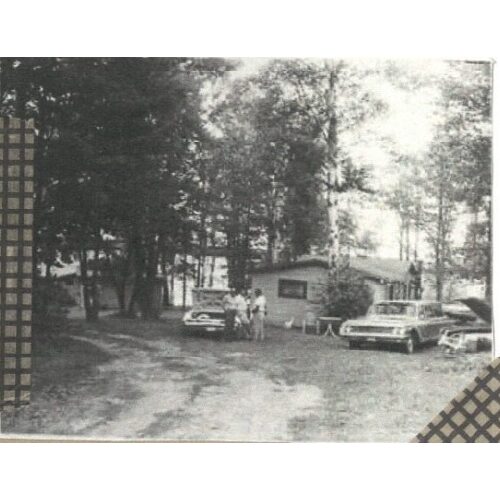
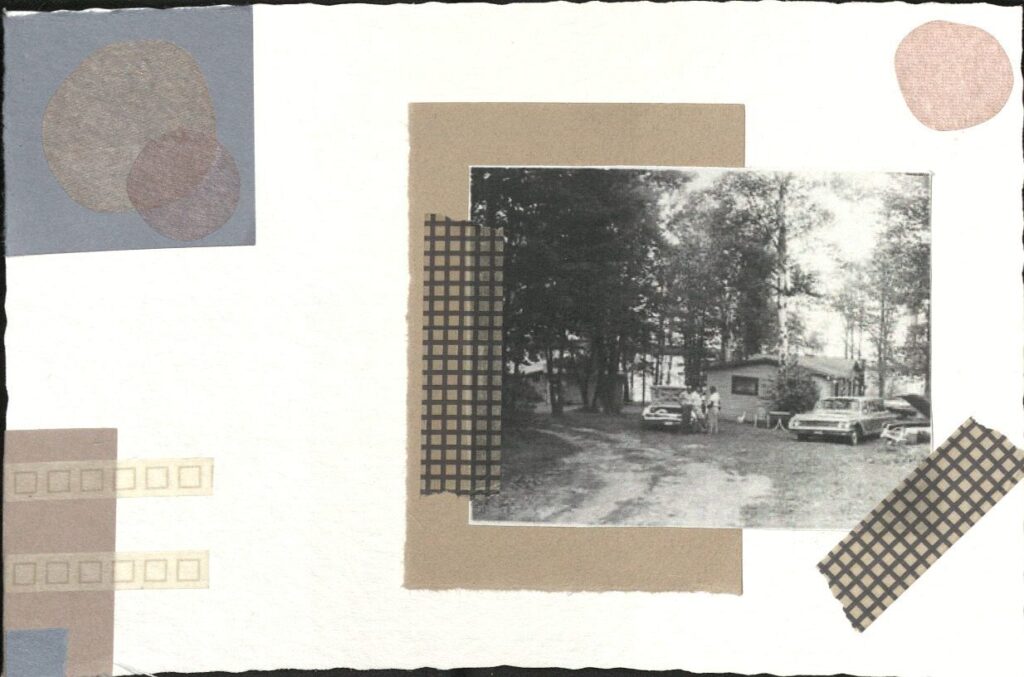
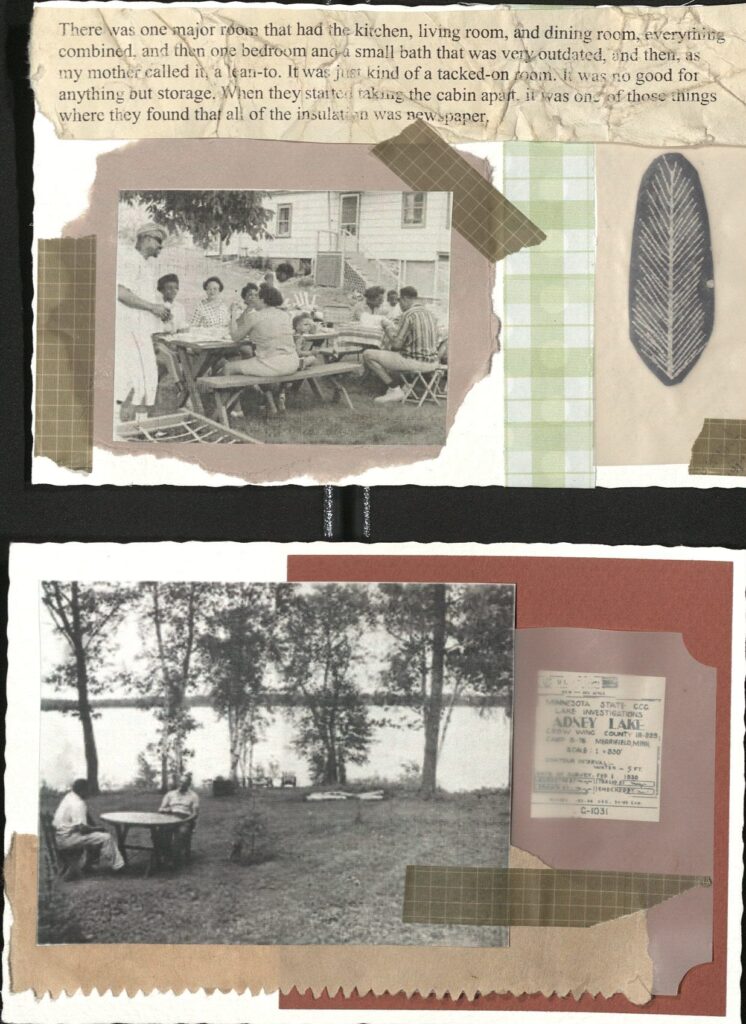
These postcards are based on the oral history collections of African Americans from Kansas who acquired property on Lake Adney. Dating back to the 1920s, Black families owned land on the southern shore of the Lake in Crow Wing county, Minnesota. Lake Adney became a place of respite and belonging for Black Midwesterners, where Black relationships to the environment, fresh water and cabin culture.
Lake Adney Oral History Project. Oral History Interviews of the Lake Adney Oral History Project. Minnesota Historical Society.
Postcards #4 & #5
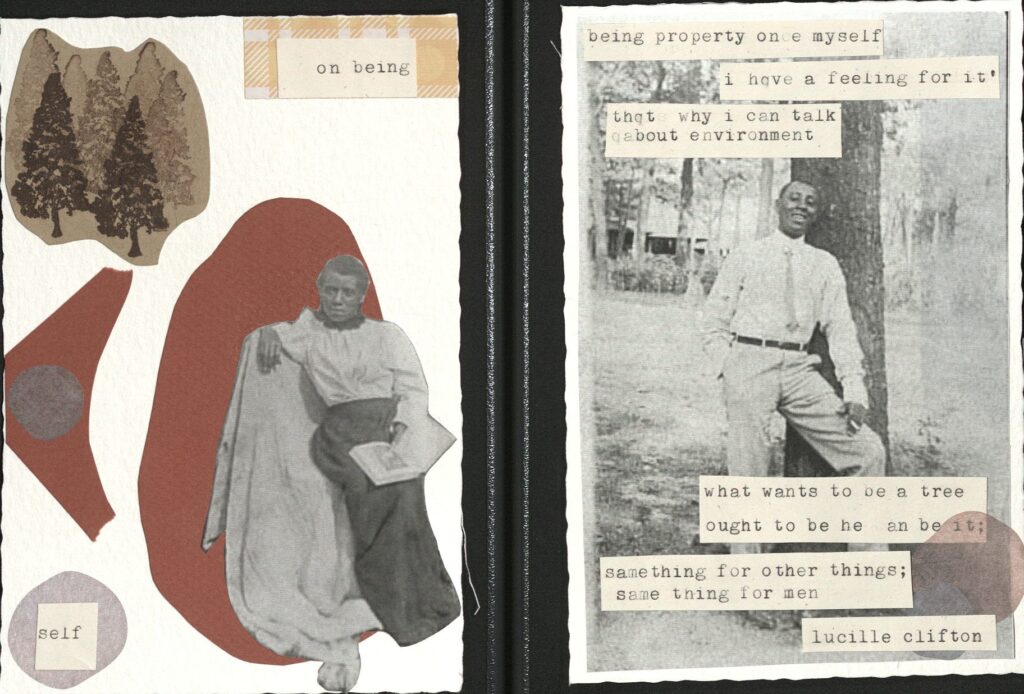
These postcards play with the written word and photographs of Black Minnesotan’s in the outdoors. They pose the question core to Black geographic though: How have Black people thought about the environment as both a site of liberation and as the location of our oppression and bondage? The natural world is a complex location for self-making and exploring Black identities. For these two postcards, I chose to highlight the poem of Lucille Clifton, being property once myself.
being property once myself
i have a feeling for it,
that’s why i can talk
about environment.
what wants to be a tree,
ought to be he can be it.
same thing for other things.
same thing for men.
Lucille Clifton, “being property once myself” from How to Carry Water: Selected Poems. Copyright © 1972, 1987 1991 by Lucille Clifton.
f
Postcards #6 & #7
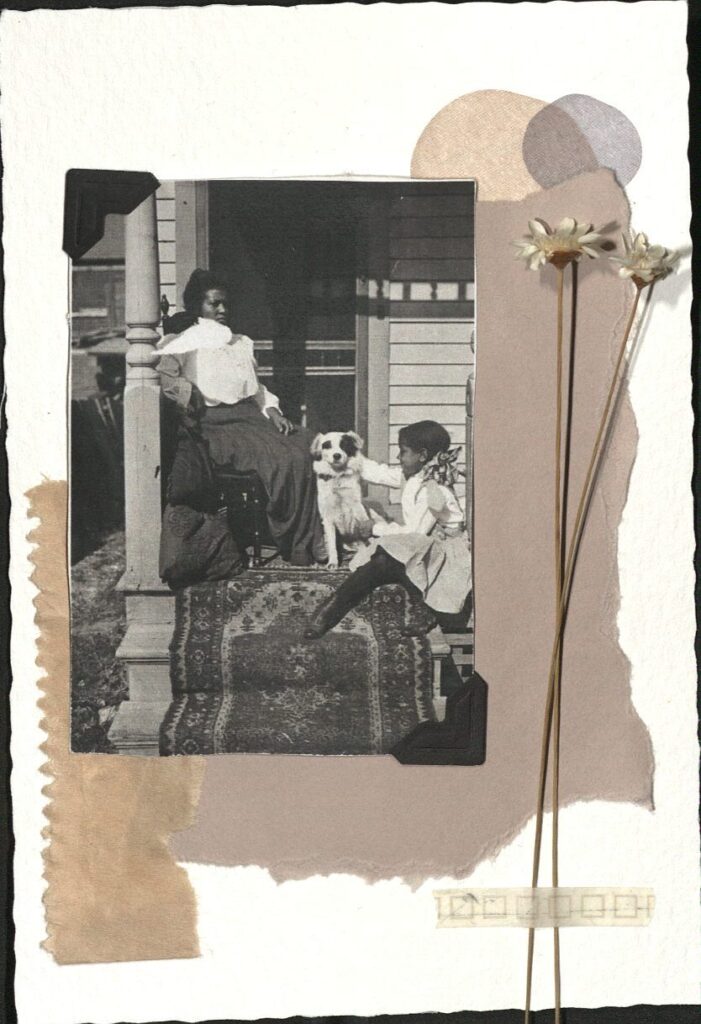
African Americans in the Minnesota State Archive are often unidentified. Even more, very few collections emphasized the relationship between Black Minnesotan’s and the environment. These postcards represent a creative way of searching for Black life and joy by emphasizing the more-than-human world. Finding positive relationships between Black people and animals felt especially important to the conversation about environmental justice. Black people have been dehumanized, often with derogatory comparisons to non-human animals. However, these photos represent a different relationship between Black Minnesotans and animals, that displays an intimacy and multispecies care.

Postcard #8
This postcard highlights the history of enslavement in Minnesota territory in the 19th century. This list of slaves owned by Indian agent Lawrence Taliaferro is one of the only archival documents in the Minnesota Historical Society that names the enslaved and their date of freedom. Of particular significance is the second to last name: Harriet. This is believed to be referring to Harriet Scott, wife of Dred Scott, whose joint suit for emancipation hinged on their experience living in the North, where slavery was illegal. The two were enslaved at Fort Snelling, in St. Paul Minnesota and their invisible labor turned Minnesota into the state it is today.

Postcard #9 & #10
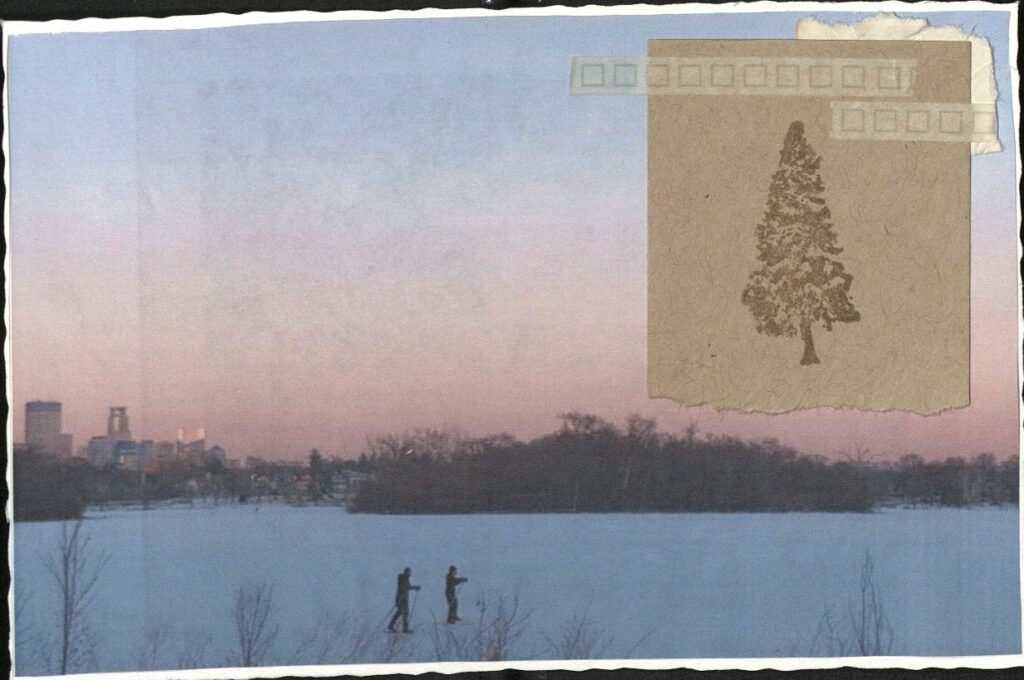
These two postcards round out the collection by demonstrating additional collage techniques and rubber stamping. Postcard 9 uses my personal photo of winter skiers on Lake of the Isles in Minneapolis along with recycled paper accents, while postcard 10 relies on an historic photo of a group of Black girls posing in nature.

Backside of each postcard

About Jane Henderson
Jane Henderson, PhD, is a critical historical geographer and an Assistant Professor in the Department of Geography at Dartmouth. Broadly, her work addresses the tensions between Black placemaking and settler colonialism across North America and the Caribbean. Her current book project, “Frontier Futures: Black Geographies and the Making of Minnesota” argues that the Black Minnesotan experiences are shaped by the material and metaphoric geography of the frontier. In addition to her individual research, Jane is co-PI on the Antipode Foundation funded project, “Beyond Esri: Moving Toward Abolition in Geography,” which examines the role of geography education and geospatial tools in contemporary policing and surveillance. Her research can be found journals such as The Professional Geographer and Society & Space. At Dartmouth, she teaches courses on racial capitalism and environmental justice. Jane received her PhD in Geography from the University of California, Berkeley, where she was one of the founding members of the Berkeley Black Geographies project.
More Info
Hometown: St. Louis Park, Minnesota
Fun Fact: “10 years ago I spent a semester of college living on a ship and traveling to multiple
countries across the Asia and Africa. As part of that study abroad program, I got to have lunch with Archbishop Desmond Tutu in his home in South Africa. It was truly an experience I will
never forget.”
Influential Text on Their Work: Mrs. Dred Scott: A Life on Slavery’s Frontier by Lea VanderVelde