About Us

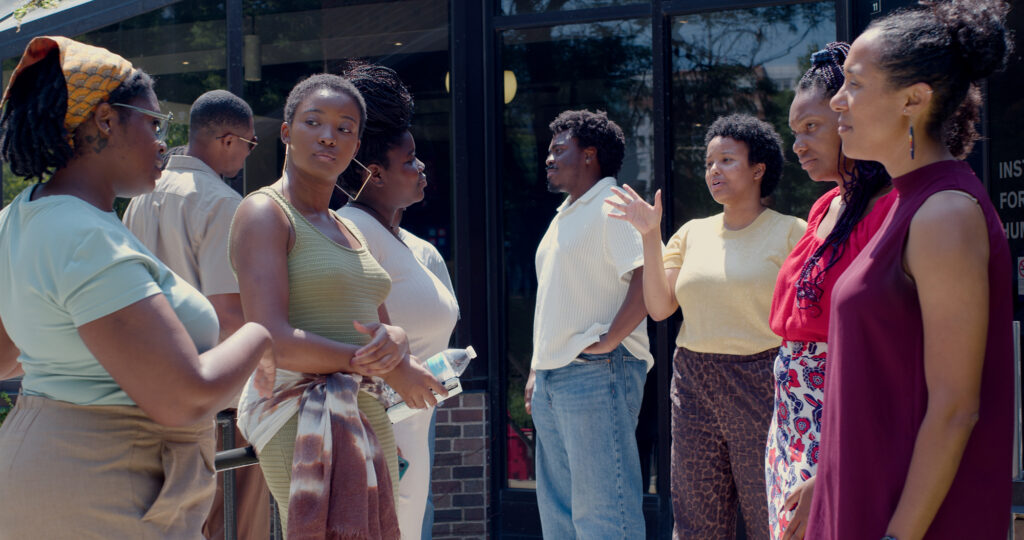
The Black Midwest Justice Hub is a project of the Black Midwest Initiative. Currently, this digital platform is used to support the work of the BMI Environmental Justice Collaboratory, a cohort of instructors across the Midwest who are all teaching courses related to environmental justice during the 2026-27 academic year. The hub provides a wealth of resources to students and community members interested in learning more about environmental justice, including providing access to original digital content that will be made available throughout the year.

Project Team

Dr. Freda Fair
Fellow Liaison and Faculty Coordinator
Dr. Freda Fair is an interdisciplinary scholar and teacher who studies race, gender, sexuality and culture in the United States with a focus on the American Midwest. Freda’s research areas include queer politics and aesthetics, black gender and sexuality studies, women of color feminism, queer of color analysis, intersectionality, visual culture, and social movement and labor responses to policing and criminalization. Their in-progress book manuscript examines the emerging concept of “the Black Midwest” to argue that black struggles for freedom in the Midwest radically mobilize the region as a strategy to unsettle US liberal capitalist state power while uncovering pivotal social and political erasures on which national unity depends. Guided by visual cultural and historical archival materials, the study asserts that even as Blackness has been posited as peripheral to the Midwest, fugitive and queer Black Midwest resistance against slavery, sexual criminalization, anti-black and anti-queer life expectancy discourses, and police brutality demonstrate the centrality of black culture to the region. Freda’s work in the university is informed by collaborations with community-based libraries, archives, and museums. Freda earned their Ph.D. and M.A. in Gender Studies from the University of California, Los Angeles, and their B.A. in American Studies with minors in Women’s, Gender, and Sexuality Studies, Spanish, and African American Studies from Macalester College.

Bettina Johnson
Lead Collaboratory Coordinator
Bettina Johnson is a lifelong resident of Chicago and an alumna of both Chicago Public Schools and University of Illinois – Chicago. Prior to joining SJI, Johnson worked in direct service provision in the domestic violence sector followed by compliance work in the medical device manufacturing sector. Johnson is also a training lead and facilitator for prison abolitionist campaigns and organizations in Chicago and has coordinated several community and campus projects.

Njaimeh Njie
Media Specialist
Njaimeh Njie (b. 1988. Pittsburgh, PA) is photographer, filmmaker, and collagist telling stories about individual and community histories. Her work examines how relationships between place and people evolve over time to shape contemporary experiences and identities. Her work has been exhibited in spaces including the Mattress Factory and Silver Eye Center for Photography, and her photos are included in the permanent collections of Pérez Art Museum Miami (PAMM) and Carnegie Museum of Art. Her public art is on display permanently at the Pittsburgh International Airport, and she has presented at venues including TEDxPittsburgh Women, Brown University, and Harvard Graduate School of Design. In addition to her fine art practice, Njie is the Founder and Lead Producer of the documentary storytelling company, Eleven Stanley Productions. She earned her B.A in Film and Media Studies from Washington University in St. Louis in 2010.

Jade Simone B. Williams
Project Coordinator
Jade Simone B. Williams (she/they) is a graduate student at the UIC School of Public Health, pursuing a degree in Epidemiology. They are interested in how illness manifests as disproportionate inflammation in the black body, particularly in autoimmune illness. Simone has a passion for documenting and honoring Black life in various creative mediums as an artist and multihyphenate. Through their education, research, and calling, Jade hopes to disseminate information and create spaces + opportunities for loved ones, community members, Black Midwesterns, and the global Black community to be fortified in our collective wellness and liberation.

Terrion L. Williamson
Director and PI
Terrion Williamson is an associate professor of Black Studies and Gender and Women’s Studies at the University of Illinois Chicago, where she also serves as the director of the Social Justice Initiative and its partner organization, the Black Midwest Initiative. She is the author of Scandalize My Name: Black Feminist Practice and the Making of Black Social Life(2017), the editor of Black in the Middle: An Anthology of the Black Midwest (2020), and co-author and PI of the report Taking Account: A History of Racial Harm & Injustice Against Black Illinoisans (2025). Her research attends broadly to working-class Black life in the deindustrializing Midwest, with an emphasis on Black women’s experiences of interpersonal harm and gender violence. Her current book project, The Unreckoned, centers the story of nine Black women who were killed in her hometown of Peoria, Illinois between 2003 and 2004.
Collaboratory Instructors

Chanel Beebe
Artist, Writer, Educator, Engineer, Small Business Owner, Researcher, Activist
Pronouns: she, her, hers
Dr. Chanel Beebe is a Detroit-born interdisciplinary artist, educator, researcher, and writer whose work lives at the intersection of creativity, community, and systems transformation. She is Founder and CEO of Beebe Arts LLC and an Adjunct Faculty / Lecturer at the University of Michigan’s Taubman College of Architecture and Urban Planning, where she teaches UT 210, Listening: Design Ethnography Methods, and leads the Radical Planning Speaker & Workshop Series, which invites practitioners and organizers to teach city planning from lived experience. Her paintings, photography, and mixed media explore memory, identity, labor, and liberation, and she founded the Cultural Design Marathon, a decade-old community design sprint methodology. Holding a B.S. from Michigan and an M.S. and Ph.D. from Purdue, she is a Gates Millennium Scholar, Ford Foundation Fellow, and author of the dissertation, But What Does It Mean to the People Who Matter?

Kate Derickson
Kate Derickson is a Professor in the Department of Geography, Environment and Society, the co-Director of the CREATE Initiative, and the Managing Editor of Environment and Planning D: Society and Space. She is also a member of the Gullah/Geechee Sustainability Think Tank and serves on the Board of Directors for the East Side Freedom Library. For the past 6 years she has been teaching incarcerated people in Minnesota through the TREC program.
Tia-Simone Gardner
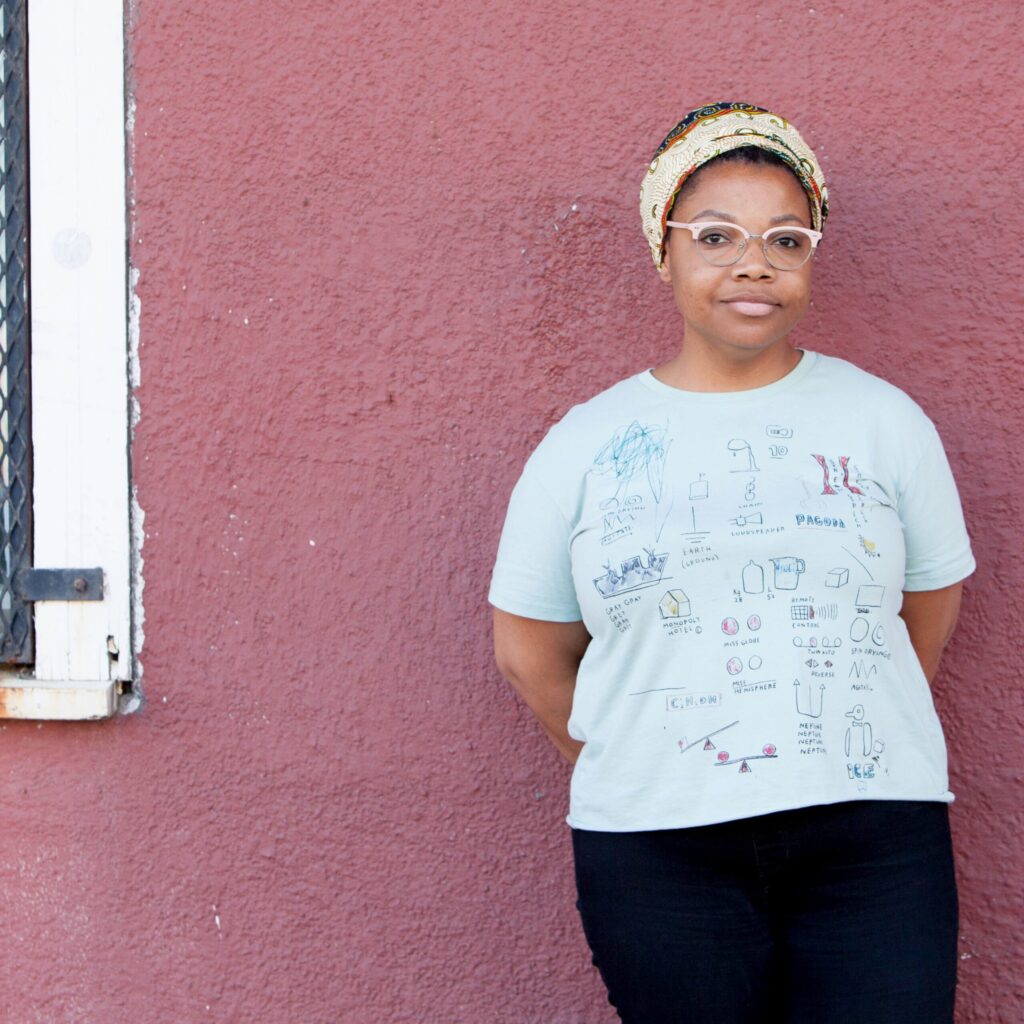
Tia-Simone Gardner is an artist working across the limits and possibilities of images. As an educator and undisciplined Black feminist geographer she is committed to understanding relationships between Blackness and landscape. She is the recipient of a 2020-21 Smithsonian Artist Research Fellowship 2024 NYFA, Anonymous Was a Woman Grantee. Her work has shown both nationally and internationally, and her writing has appeared in Georgia, an independently published arts writing journal, and New Suns, a journal published by USA Artists. Gardner is an Assistant Professor of Media and Cultural Studies at Macalester College in St. Paul, MN.

Stephanie P. Jones
Dr. Stephanie P. Jones is an Associate Professor of Education at Grinnell College whose scholarship examines the intersections of teacher education, antiblackness, racialized trauma, and curricular violence in schools. She earned a PhD in Language and Literacy Education from the University of Georgia and holds both a MEd and BA from the University of Pittsburgh. Prior to her academic career, she taught high school English for six years in Atlanta Public Schools.
Dr. Jones is the creator of the Mapping Racial Trauma in Schools Project, a digital humanities initiative that documents and analyzes racialized incidents in educational settings to foster public dialogue and educational change. Her research and public scholarship have appeared in outlets including Learning for Justice, English Journal, English Leadership Quarterly, and English Teaching Practice & Critique. A Fellow of the Associated Colleges of the Midwest Mellon Faculty Fellows Program, she has also received a Humanities Fellowship from the Grinnell College Center for the Humanities. Her work is supported by the American Philosophical Society, Digital Bridges, and the Andrew Mellon Foundation.

Ola U. Kalu
Ola U. Kalu, Ph.D., is a postdoctoral research fellow jointly appointed at the Children’s Hospital of Philadelphia and the University of Pennsylvania’s Perelman School of Medicine. A sociologist and former literacy educator, she studies how place shapes life across the life course from schooling to reproductive health and birth outcomes grounded in Black geographies, racial capitalism, and Black feminist theory. She earned her Ph.D. in Sociology from the University at Albany, SUNY, along with an Education Specialist degree in Curriculum and Instruction and brings eleven years of K–12 classroom experience to a practitioner-scholar approach to teaching. Her current research maps how neighborhood conditions shape environmental exposure, housing, and birth outcomes in American cities, and how communities organize for justice, accountability, and repair. In the classroom, she pairs demographic and spatial analysis with community-produced knowledge, inviting students to read maps as arguments about power. She leads public education on reproductive and environmental justice and is based in West Philadelphia.
Sarah Nahar
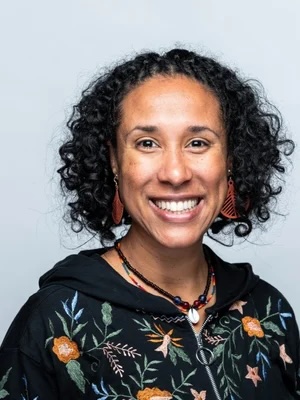
Sarah Nahar, M.Div., Ph.D., (she/her) is a nonviolent action trainer and interspiritual theologian, and the co-founder of Eco-Friendly Elkhart: Realizing Transition, a climate justice organization based in her hometown of Elkhart, Indiana (traditional Potawatomi land). An emerging expert of Excreta Infrastructure Technologies, her doctoral work centered on ecological regeneration, community cultivation and discard studies. Sarah has been a Rotary Peace Fellow, a Yale Environmental Justice Fellow, and periodic inspirator at the Martin Luther King, Jr. Center in Atlanta, Georgia. She was the executive director of Community Peacemaker Teams, an organization committed to building partnerships to transform violence and oppression worldwide. She attended Spelman College, majoring in Comparative Women’s Studies and International Studies, minoring in Spanish. She has a Masters of Divinity from Anabaptist Mennonite Biblical Seminary. She teaches in the University of Michigan’s interdisciplinary Program in the Environment, and works closely with the Tishman Center for Social Justice and the Environment.
Melissa Rosenzweig
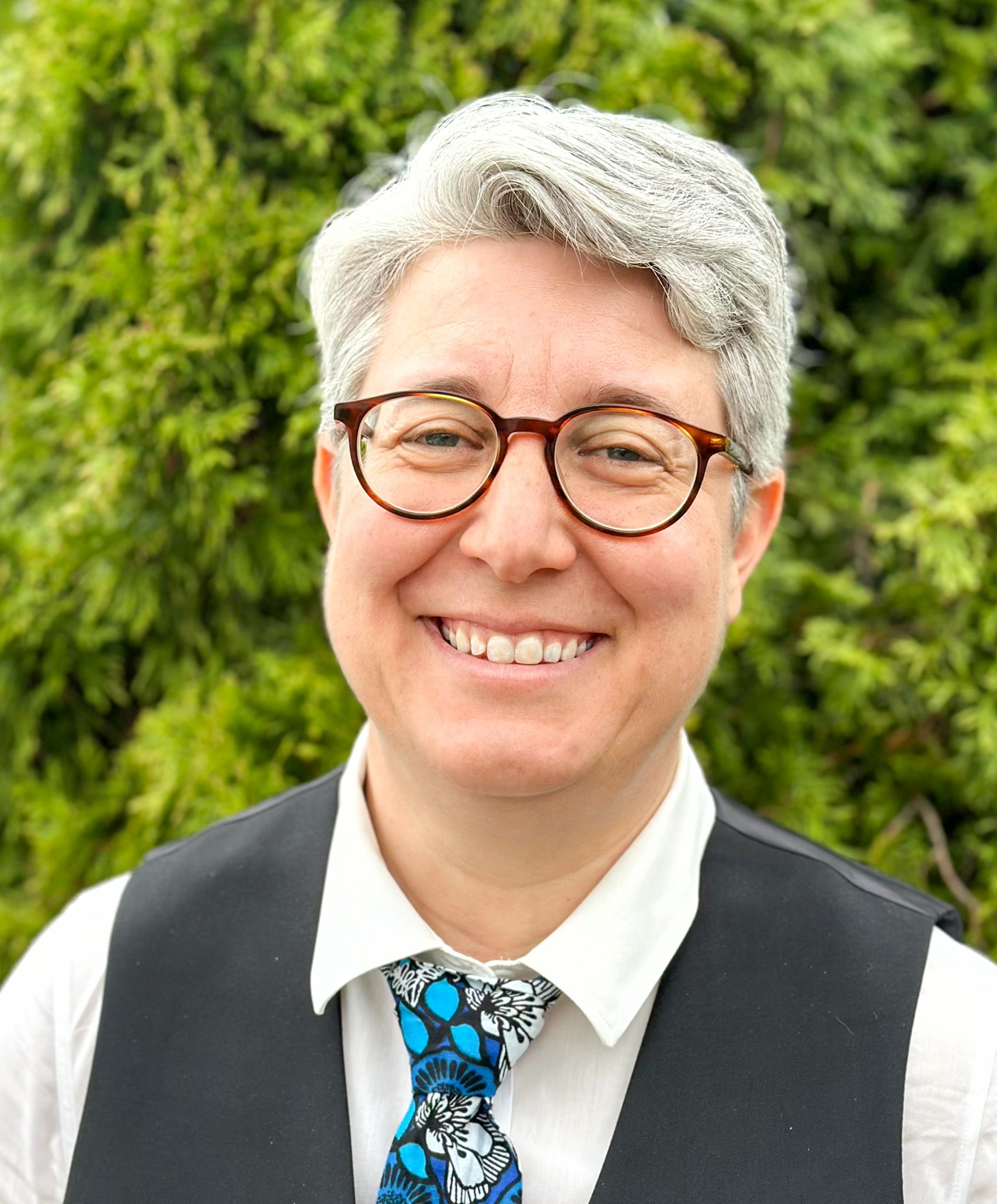
Melissa Rosenzweig is an environmental archaeologist in the Department of Anthropology and Program in Environmental Policy and Culture at Northwestern University. Her past research has incorporated scholarship on the ancient Mesopotamian empire of Neo-Assyria (ca. 900 – 600 BCE), one of the world’s earliest and largest imperial projects, and brings a focus on relationships of power and inequality embedded in agrarian lifeways.
Her current research focuses on archaeologies of environmental justice. HARBoR Evanston: Historical Research for Black Residents of Evanston is a local project in collaboration with the Shorefront Legacy Center and Dr. Mark Hauser (Northwestern) to create a community-led “deep map” of Black Evanston that includes oral histories, archaeological remains, and historical maps and texts to document Black homes, businesses and cultural institutions that have been lost to destruction, development and abandonment.
Courses taught include “Chicago Environmental Justice,” “Political Ecology,” “Environmental Anthropology,” and “Archaeologies of Sustainability and Collapse.”

Louise Seamster
Louise Seamster is a sociologist whose research examines contemporary mechanisms for the reproduction of racial and economic inequality. Dr. Seamster’s research centers on politics and urban development, emergency financial management, debt, and the myth of racial progress. Her first book, The Flint Water Coup: Debt at the End of Democracy (under contract with Duke University Press), investigates the financial and political causes of the Flint Water Crisis. In parallel, her Flint Email Lab of graduate and undergraduate students is creating a website archive of public government email communications relating to the crisis. Another line of research examines racial disparities in debt. Her work on “predatory inclusion” in student debt has led to extensive policy work, including research informing Senator Elizabeth Warren’s student debt forgiveness plan. Her many media appearances include the New York Times’ Ezra Klein Show, WNYC’s The Takeaway, Bloomberg News, and other national outlets.

Soleil Smith
Soleil Smith is a 5th year PhD student at the University of Illinois Chicago. Specializing in Political and Environmental Sociology, their research focuses primarily on state repression of environmental movements, the interplay between colonialism, imperialism, and conservation; and the contemporary proliferation of spatial fixes in green space. She is concerned with the ways that power is displayed within the landscape and how that power can be disrupted from below. This focus informs her teaching agenda, putting together courses that emphasize collectively working to understand power in all its forms and our role as social, political, and ecosystem actors. She has recently taught an abolition and environmental justice focused iteration of Race and Ethnicity 425 and is currently crafting Chicago Climate Futures. Chicago Climate Futures is a 200 level undergraduate course that gets students to consider how we make meaning of land, life, and the futures that we try to build over and against the forces of capitalism and white supremacy in the second city.
shakara tyler
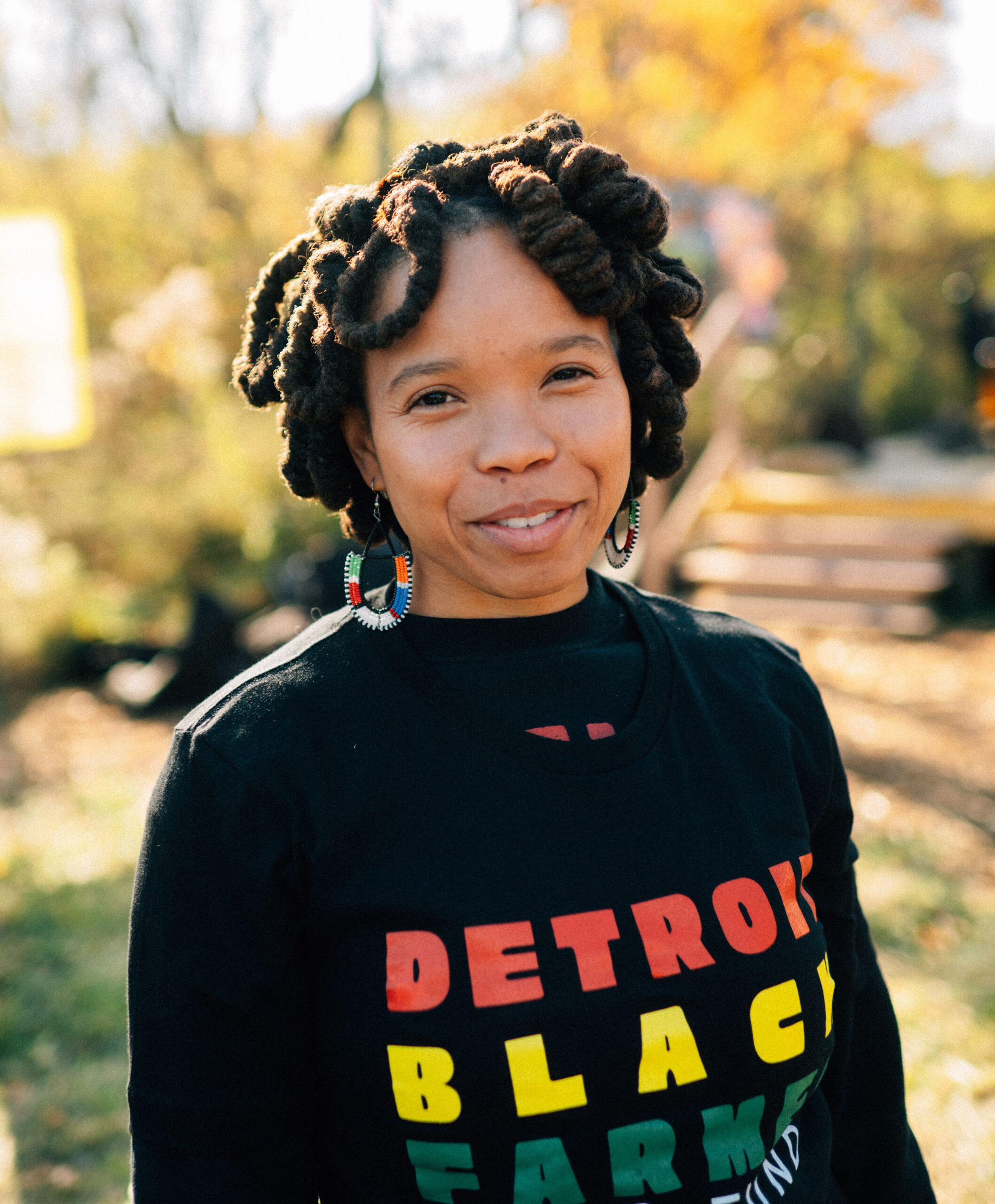
shakara tyler is a returning-generation farmer, educator and organizer who engages in Black agrarianism, agroecology, food sovereignty and environmental justice as commitments of abolition and decolonization. She obtained her PhD at Michigan State University in Community Sustainability (CSUS) and works with Black farming communities in Michigan and the Mid-Atlantic. She explores participatory and decolonial research methodologies and community-centered pedagogies in the food justice, food sovereignty and environmental justice movements. She is the Co-Executive Director of the Detroit Black Community Food Sovereignty Network (DBCFSN), board member of the Detroit People’s Food Co-op (DPFC) and co-founder of the Detroit Black Farmer Land Fund (DBFLF) and a member of the Black Dirt Farm Collective (BDFC) and a Lecturer at the University of Michigan in School for Environment and Sustainability (SEAS).

Alexis Morgan Young
Alexis Morgan Young is an Assistant Professor of Black Feminisms, Genders, and Sexualities in the Department of African American and African Studies at Michigan State University. Her research centers the liberatory literacies of Black girls in elementary and middle schools to illuminate the utility of Black girls’ utopian fantasies in world-making projects. She partners with them to co-create spaces that forefront their expertise and utopian fantasies where they dream of otherwise worlds and have their recommendations for the future recognized as valid knowledge. Her work underscores the importance of recognizing Black girls and women as whole, imaginative beings and challenges us to (re)imagine a world where they are seen as experts of liberation. She holds a Ph.D. in Urban Education from the University of Maryland, College Park, as well as an M.A. in Teaching and Curriculum and a B.A. in Elementary Education, both from Michigan State University.
Support Our Work
By giving, you help provide the time and freedom that researchers and fellows need to pursue meaningful work that advances knowledge, inspires new ideas, and contributes to social change.