
3 Sistas Garden Project
- Project by
- Liv Furman
- Pronouns
- they/them

Project Overview
The following artifacts contain video, photo, and narrative documentation of 3 Black urban farmers and gardeners in Lansing, Michigan who are working together to create a collective farm project called 3 Sistas Farm Collective. The video documentation unpacks oral histories regarding the following 3 themes: Family lineage and gifts, farming and gardening experience, and career foci and professional goals. The supplementary photos and narrative outline the development of the collective garden space and document the personal histories of each of the 3 Sistas founders.
The three urban farmers/gardeners included in this project are:
- Dinah George, of Cowrie Acres Farm Project
- Hillary Coleman, of 1991 Greenery & Homestead
- Dr. Liv Furman, African American & African Studies at MSU
What is the 3 Sistas Farm Collective?
The 3 Sistas Farm Collective is composed of Black gardeners and farmers currently living in Lansing, Michigan. This group of Black gardeners is committed to means of growing crops that are reflective of the ancestral practices found across the African Diaspora, in ways that seek to honor and sustain Anishinaabe and other Indigenous American growing practices, food sovereignty, and land knowledge. This collective was formed based out of a need to see representation of the Black farming and gardening community in the Lansing area (because we know, you don’t have to go to Detroit to find Black farmers) but also to investigate and interrogate the process of actively building a solid relationship with the land in current times. This includes engaging with neighbors in our South Lansing community, which has a significant population of Black and other people of color who have made this space their home. Our collective has established space in the Baker-Donora Neighborhood with the help of the Ingham County landbank, and are in the process of developing the garden plan and layout. Although this collective started in 2025, all members of the collective have gardened and farmed in Lansing for the past 5-12 years. Bios for the founding members are listed below.
Hillary Coleman: I’ve been gardening in Lansing, Michigan for over twelve years, and it’s truly where my heart feels most at home. In 2020, I started 1991greenery, originally selling houseplants across the country. As the houseplant market became saturated, I decided to follow what really brings me joy—urban homesteading. Since 2022, I’ve been growing herbs, caring for fruit trees, and raising chickens on my tenth of an acre homestead on Lansing’s Westside. My little homestead is a space where I blend creativity, sustainability, and purpose every single day. My passion for herbs led me to create the 1991greenery Homestead Apothecary, a small-batch natural body product line where I use the herbs I grow to craft high-quality, affordable body care. I also love sharing what I’ve learned by teaching others how to garden in small spaces and make their own natural products. After serving two AmeriCorps terms at the Hunter Park GardenHouse I was hired as the GardenHouse Manager in September 2024. Now, I get to continue doing what I love most—helping my community grow, learn, and reconnect with the land.
Dinah George: I have gardened and farmed over the past 5 years across the Midwest in Michigan and Ohio. Much of that work has been as an assistant, intern, and food coordinator at varying garden/farm spaces in Lansing, Ann Arbor, and Detroit like Hunter Park Gardenhouse, the UM Student Organic Farm, D-Town Farms, and Oakland Avenue Farms. My work in Ohio was with the Oberlin College Food Justice Grant awarded through the Mellon Foundation where I worked at spaces like George Jones Farm, AJ Lewis Student Community Garden, and Rid-All Farm. I have started a farm project in my own back yard in 2024 titled as Cowrie Acres Farm Project, a dive in growing African diasporic crops along with other heritage crops for sale and production, much of the work with Cowrie Acres is studying and completing research on the larger agricultural practices and food ways in the African diaspora. Recent projects include work with the Black Midwest Initiative where I am developing a seed keeping guide on African diaspora crops like those found in the mallow, brassica, nightshade, and melon families.
Liv Furman: Dr. Liv Furman has been an urban grower in Lansing, MI for six years. They learned urban gardening techniques from their maternal elders growing up in Louisville, Ky and carried this wealth of knowledge with them to their life in Michigan. They began gardening in Lansing with the aid of the Greater Lansing Food Bank Garden Project Center, yearly accessing their seedlings, seeds, and garden supplies. Later, they expanded their urban gardening praxis by volunteering at the Allen Neighborhood Center (ANC) Hunter Park Garden House, and soon after they enrolled in and completed the ANC Urban Gardeners Certificate Program. They now teach courses related to Black agricultural traditions, such as Black People & Land and Black Ecologies & Environmental Justice, at Michigan State University. Throughout their time gardening in Lansing, they have enjoyed sharing knowledge about gardening, produce and herbs from the garden, and canned goods with neighbors and friends.
Supplementary Photos
How does your proposed HUB project relate to your larger body of work or the environmental justice work you do more generally?
This oral history project is a celebration and outgrowth of my own family’s history with homesteading, farming, and gardening. The focus of this project on documenting and forwarding the work of Black women and gender expansive farmers is directly aligned with my academic grounding in African American and African Studies at Michigan State University, a department grounded in unapologetically honoring and embodying Black feminisms. It is also connected to my scholarship related to the fields of Black Ecologies Studies, Environmental Justice, Food Sovereignty, and Sustainability, specifically to my teaching of courses like Black Ecologies & Environmental Justice and Black People & Land.
The project is also directly connected with my archival scholarship and praxis. Throughout my work within archival spaces and working for the Quilt Index, I have seen first-hand the power and importance of archiving and preserving artifacts of Black experience and memory. This memory keeping project regarding 3 Black gardeners/farmers in Lansing follows in the footsteps of writers and projects like Natalie Baszile’s We Are Each Other’s Harvests: Celebrating African American Farmers, Land, and Legacy, which provides thoughtful memoirs, personal narratives, images, and essays regarding African American histories of migration and agriculture in the U.S.
Video Interview Description
The video interview documents the following questions, grounded in three themes:
- Family lineage and gifts:
- Where are you from? Where are the elders in your family from? What embodied knowledge, gifts, or tools did they pass down to?
- Farming and gardening experience:
- What training or collective gardening experience have you received? What books, workshops, or other tools/resources have been influential in your developing perspective and practice as a Black farmer or gardener?
- Career foci and professional goals:
- Describe your current career path and what got you on this track. Also, describe the ways your future goals are informed by your positionality, training, relationship with Black communities and the land.
A transcript of the video interview is listed below:
Here we are with the Three Sisters Garden [Farm] Collective. Today, we’re gonna do an interview that’s documenting information about us, who we are, our families, our legacies. um. The intention of this is to create an artifact that we will then share with the Black Midwest Initiative and also have for ourselves that documents, you know, again, the legacy of all of us here in the room, people who inspired it, as well as just like where we’re going and our vision for the Three Sisters Collective Garden [Farm] in Lansing.
So we’ll start with some questions on family lineage and gifts. These questions are kind of inspired by different stories that I have encountered that document Black folks’ legacies and relationships with land. Specifically, I’m thinking about, We Are Each Other’s Harvest, the collective anthology that was done by Natalie Baszile. And that documents generations and generations of Black farmers and gardeners thinking about, like, where we came, where we’re going, and the ways that different elders have informed what current and future practitioners of Black agrarian practices are doing. So inspired by that, as well as as Isabel Wilkerson’s, The Warmth of Other Suns, we’re going to think about our own families, our elders, and ancestors. So the question for that is, where are you from? Where are the elders in your family from? And what embodied knowledges and gifts or tools did they passed down to you?
Well, um, my ancestors are a little bit from Arkansas and Saginaw, Michigan as well. And I, what they passed down to me is just, you know, gardening wise, my mom always had a garden. And I just kind of learned from her by just watching her. And one day I just decided to build a garden. When they lived in Haslett, I lived with my parents and I built this garden. My dad bought this greenhouse and I found out I was good at it, so yeah. Also, can you introduce yourself? [laughter] I realized we didn’t do that. I’m Hillary Coleman, owner of 1991 Greenery and, um, I’m one of the managers at the, um, Hunter Park Garden House as well, so. Thanks.
Um, my name is Dinah George. I do things with the Cowrie Acres Farm Project, also at Hunter Park Garden House. Shout out to Hillary. [laughter] um. I, um. So when I think about my ancestors, I think of Alabama, um, they kind of range across spaces but mostly very rural Alabama. um. uh. The city my dad and my family is from is Wetumpka, Alabama. So deep, deep, deep South. um. As well as like Montgomery and things like that. But yeah I think that and for the people I don’t know somewhere on the continent. um yeah. um. And I think gifts, I have the gift of gab, and I like to think that I resemble my mom in some way, where people feel warm and feel the ability to open up and talk to me. That is one of the gifts that she left me with, so.
When I think of my elder and ancestors, I think of Louisville, Kentucky, and Lebanon, Kentucky. um. So the Lebanon, Kentucky is like more in the country that’s where most of my family is from. uh. My granny’s family is from there as well as my Poppaw’s family. um. And they also lived in like Columbia, Kentucky that’s a little other cities around. um. And the eldest, like, person in my family that I like really know of is my grandmother’s grandmother, um, Fannie and Nelson White. And they, like, were farmers, homesteaders. um. And Fannie, specifically, um you know, helped raise all the animals. um. Also had chickens, would sell the eggs, like, at the market. um. Also did all the canning and preserving of foods. Um they had pigs on the property. They had the, you know, the cold cellar that they had like dug into the ground. um. And those big like rain barrel catchers on the side of the house. um. And I have learned, like, things about her from my grandmother. And my granny, uh, is a storyteller of our family. And she also has taken up some of those things, um, that her grandmother did. um. So she, my granny, Mary Furman and my Poppaw, Joseph Furman have taught me, you know, how to garden, how to, you know, do the cooking, how to keep up cast iron pots, you know, how to, you know, keep that relationship with land. um. And my granny also taught me how to like sew, and quilt. um And that’s why you see all the art and stuff. um. And those literacies and gifts have definitely been passed down to me. I also, growing up in Kentucky, we grew up C.O.G.I.C. So we were taught how to like, you know, facilitate space and, like you know, how to do the, you know, setting up for events, and like, how to take care, and all the cleaning, and all kinds of stuff. um. And it was very gendered as a child. Now, identify as non-binary. Um and even as a child, I was labeled tomboy. So, I feel like that label has, again… they saw what was happening. um. but even within that it was very gendered so all the femme folks had to learn all of those skills, um, whether we wanted to or not. um.
But I definitely think that has informed what I do now. um. I feel like that caretaking, the conversational… um. Because also when my granny was teaching how to do those things, she would also talk the whole time and share stories. So, awesome. I feel like all those gifts have come down to me. um. And then when I think about how I got here, I feel like most people, like, their families came up to Michigan, like, during, you know, the Great Migration or some wave of migration that happened after that, in seeking jobs or whatever. For me, I feel like I’m one of those later, later, later migrations. I came up here for grad school. um. And then have stayed. uh. And now I’m teaching in African American and African Studies. um. And I guess, I’m, I’m fitting in with that same theme of migration for opportunity or liberation in some way. uh. But I know other people, you know, their elders did that a long time ago.
So. [mhmm] yeah. I don’t know did y’all hear any connections from each other’s stories or [yeah.] things that you’re thinking about now?
Um, yeah because, um, so something I didn’t include, uh most of my family’s from Alabama but a lot of them did come up from the South for jobs. um. Most of my great aunts and uncles are retirees from Oldsmobile, or GM, or du-duh-du-duh. um. And so I grew up kind of in the shadow of a lot of that. um. And a lot of their understandings of the world have been helpful but it also made it a little bit, a little bit difficult, because I think one of the gifts that i have is my mind and my thoughts. And, um, they’re like, well listen, I worked that job and now I’m retired so, you do you Dinah. And I’m like, that’s helpful. But, um, I don’t know what to do. um. Because this isn’t me being me. It was. I don’t really. I don’t always feel like I fit in that continuum that they have. um. But their passion and their ability to create space here has been really influential in how I kind of understand the world. Before we were, before we started, um, I was talking to Hillary about all my cousins. [laughter] yea. I literally have so many, to the point where when I talk to folks outside my family, okay so is it this one? Or is it this one? And so being able to have a feeling of like, I always have a place somewhere. I found going forward like that’s kind of unique. um. That’s also a tangent. But, yeah they’re, they’re everywhere. And it’s been really cool to kind of actually see their response to the Farm Collective. We saw that one cousin who pulled up. Yeah, literally! Oh my gosh, so funny! I think about it often. um. Because, I also find a way to see a sign, um, and see like reasoning in the world and things. And, literally while we’re walking around looking at the plot seeing what will work here, what work here, I just see this person like driving by staring at me. And I’m like who is this person just staring? And it was funny, when we both realized who each other was, I was like, Yo! He’s like, yeah I live down the way. I was like, I ain’t even know you lived over here. But, you know, um. But it’s already providing opportunity for connection and in ways that I think my family is like yearning for now.
Because, um, is it okay if I keep goin? Yea, keep going. Because uh so with the reason why I started or got back to like farming and ag, it was because my mom passed away last year. and. Um. It’s been like this really important moment or defining thread in my story. um. Because it’s forced me to remember things that I had either pushed away or just chose to not remember. And my love for the land was what got me into these spaces in this work. Just being infatuated like with what could be, what, what I helped create and support in the land. And my mom was the person who although, funny, hated gardening, hated farming. So, I was like that was so sweet, because my mom, she said, “Dinah, I don’t know why you’re in that dirt. [laughter] I don’t know why you doing this. I don’t get it.” And, I’m like mom, just like, just just vibe with us, just vibe. Like, you’ll get it. You’ll get it. um. But like seeing the way she was able to still kind of do that kind of farming and growing and creating but in her own way with our family and people in her community, it, it like encouraged me to be like, all right I’m in this, like, real big, like, depth of grief. What can I do? What reminds me of my mom? And going outside, and just touching the land, and figuring out, okay this is how this works. This is how this works. Was very helpful for me in that process. um. And, yeah. It gave me, like, a sense of purpose again. It gave me a reason to think about, okay well, I do like this stuff, I could just research it. Or, you know, I could figure out how plants work, and how soil works. So now this thing that just was supposed to support me and be a spark, has helped me to move along. And my mom was one of those people that helped support that. So I feel like in a way, it just connects me, um, to her. And, it makes it so like the grief is this very full experience rather than it just being sad. yeah. um. Because she kept it moving for better for worse, she kept it moving. like. Things would happen, but she found a way to continue and move forward, and still do that with other folks. So, I’m grateful for y’all. um. Yeah, but that’s what, like, sparked in my mind. Yeah, okay.
And I love that your relationship with land is able to keep your relationship with her like alive, and active, you know the memory present. Even though she did not garden or farm. [laughter] It was so funny though, because like, before she got sick, so last, the year before last, I was like listen, I’m gardening and farming whatever. She’s like, I wanna little garden. I was like, you do?! [laughter] The lady was like, I don’t want to bugs, I don’t want no… And so, one of the things she would do, I just sent up like two planters and they were tomatoes, because everybody intro is tomatoes. And so she would just call me and be like, Dinah, I don’t know what’s going on. [laughter] I was like, mom, what’s happening? She’s like listen, it keeps on doing this, but I don’t know. I was like, did you water it? She said, yes, yes, yes. I’ve done the thing. Water. I was like, you just have to be patient. She’s like. [breathes] That patience part, man, it’s hard. Next week, she’s like, so this is my harvest. I said, wow look at you girlfriend! You did great! [laughter] She said, thank you. It was really good. I said, I know. She said, I had it in my salad. I said, ooooh, you had a salad too girl?! I’m scared of you. um. [giggles] But like, it gave opportunity for better connection too. um. So, I think most people when they say they don’t farm or garden…[shaking head] I don’t know. you just gotta. Yeah, that’s part of like, the issue with environmental injustice, it’s the disruption, like, we have with our relationship to land. You know? Once people rediscover it in whatever way they can, especially with gardening and farming, it like gets you hitched. Yeah. Because like the land is an ancestor too. So yeah, yeah.
And if you can handle a phone, and manage to conceptualize the fact that you’re talking with people through it, [yeah seriously!] then you can handle… You definitely can! Like, it’s ,i’m not gonna say it’s not that hard. it’s very difficult. but you can do it.
Any other thoughts on like family legacy, relationships with land? um.
For me, you know, my parents started off, you know, young. They had, they started their family young. And, like, my mom would, like, can and everything. and um. you know. My grandmother, my dad’s mother, she would, um, kind of teach my mom how to do stuff like that. So, like thinking back on, like, stuff like that, they were canning for, you know, to take care of their small children and their families and everything. And, you know, I don’t have a family right now, but like just kind of like looking back on that, I just thought that was just really awesome, that, you know, she was so young doing things like that. And my family always have allowed me to be me. You know. and um. So, like, me following this path and not really having a, you know… I started off in HR. Hated it. And, I’m just a creative and having my family accept that, you know, they’re they’re just like, just follow your dream. They’ve always left me willing to do that. So, I never in a million years thought I would be a farmer. But, um, just having that support behind me is, really, really set me in a point where it’s like, I could do anything.
And I love, also, it reminds me of my family as well. They’ve gotten to know that I love to be outside and I love to be with the land. I love to be in my garden. Especially my Granny and Poppaw, like every time they ask me, they’re like, how’s the garden doin? What’s out there now? um. And I definitely got that from them. I never also imagined myself being that person. um. I think I started getting into the garden by myself when I was in grad school. And I did it for financial reasons, and I was broke as hell. And I was like I cannot live on this much money. How am I going to like, you know… And it kind of came from that point of need, but it also gave me those flashbacks to my grandparents and my mom. um. They also used to can. They still, my grandparents, they still can and preserve food. And my mom as well. um. So it. Lately I did my first batch, and I think I sent y’all the pictures. I did my first batches of pickles this year without other adult supervision. [laughter] And that was like a big step for me, because I’m taking up the same legacy, the same sustainability, um, you know, skills, gifts… that my grandmother’s grandmother used to keep their whole family alive. um. So I feel like that’s very meaningful that I’ve like full circle come back to it. um. And also that I full circle come back to it even through my, you know, the traditional means of like academic scholarship. um. Because I feel like sometimes within academia, I don’t know, everybody just expects you to just be writing papers and do whatever and be being separated. But actually my journey within academia brought me full circle and helped me understand that the relationship with land that my grandparents have, the relationship with the stories, and the relationship with the crafts is actually what we should be aiming to do. um.
And I think that even comes forth in, our family, we have a saying. uh. I love you more than dirt. And they always be like, yeah, I love you more than dirt. um. And I feel like that also is just like a respect to the land. Like we know how precious land and soil is. um. And to say to somebody, you know, you love somebody, you know, as much or more than soil, I feel like that is a big thing. um. So yeah, me doing this work now, especially in community, I think that’s important. Because y’all my new cousins up here. Yesss. So we out here in the dirt. um. I think that’s just very important. Mhmm.
Y’all gon have to teach me how to can some stuff. Yeah! I got that pressure canner! I’m scared of dying. I don’t feel like. Dinah, is not like, that’s such a low percentage. [laughter] It doesn’t always go straight to death. Right! Right. You just think you’re going to be canning some jelly and it’s just going to pop. [gestures] No! My fear is like, I eat and I’m like, this tastes really good. And then I’m in the hospital. [laughter] Botulism is a low percentage too! I said, I don’t know about this. It’s the same, um, feeling I have when it’s gamey. When people say something is gamey. That’s how I feel. But, we can do it. We can do it. [nods head]. I’m screaming. I trust y’all though. I believe if y’all teach me, I’ll know. I ate some some tomatoes from my pantry that were canned in 2023. I’m still alive. Look at me. Y’all got people that canned. I told you, my mama she didn’t touch nothin. [laughter] We’re healing that relationship. Yeah we are. Yes, um. I’m sorry. um.
So, for the next question, um. I wanted to chat about, I’m gonna skip around, um, our career foci and professional goals. um. So, basically so we started with thinking about our ancestors, how they have impacted, you know, where we are. So this one is thinking about where we are, you know, what are we doing? So, the question is, describe your current career path what you got you on this track. um. Also, if included that you want to include things outside of, like, you know, your career, but it’s like what do you do? Who are you? um. And to describe the ways that your future goals are informed by your positionality, your training, your relationship with Black communities and women.
I guess you could call me an urban farmer. I guess that’s my, that’s my title. Yeah. Yeah it’s weird to say, because like I said in the last question, I couldn’t in a million years see myself here. So what really started me was, you know, I started when I lived with my parents in Haslett. and um. I was working at a bank, and then I worked as HR um for an electrical company. and um. [giggles] And so, like, during the pandemic, um I got “laid off” and, um, so I was like, what am I gonna do? you know. I always farmed in my backyard or just garden really. But, like I was like, what am I going to do here? So, you know, my creative mind got to brewing. And I was like, okay, let’s start 1991 Greenery. And it started as a house plant company where I was shipping plants all over the U.S. Which was great. It popped off better than I expected. And then, you know, everybody loved house plants during the pandemic and it got very saturated. And I feel like sometimes people in the plant community weren’t so nice and that’s just not my vibe. So, I pivoted in 2022 to like homesteading and really like putting my all into farming. And so I was like, okay, but I need a job now. And so, I was, you know, searching for a job. I ended up at the, mind you I hadn’t worked a nine to five in like a couple years. So, I was just like, I gotta go back into this real world. So, I got a job at the library, which was great. And then I moved on into AmeriCorps. And I was at Tri -County office on aging, which wasn’t the best fit for me. um. And so I was like, hey, what’s… I don’t, I don’t like this spot. I’m feeling like my creativity was very suppressed. I was going through some mental health issues at the moment. So, um, I was like okay, I need a break. So I took a mental health break and I talked to my, um, Americorps, um, manager at the time. And she was like, hey there’s a opening at, uh, Allen Neighborhood Center Hunter Park Garden House. And I was like, cool. Because I’ve already done like workshops with them, so I was like, okay, cool. So like, a month and a half later, I ended up doing AmeriCorps through them. And I was like, I get to farm at home and at the job?! Cool. So, you know, you know, AmeriCorps doesn’t pay you that great, but it was worth it. Because I was, I was being able to, you know, teach myself things, learn from the farmer community. I got to meet other farmers. And I started to feel this sense of community within these other farmers and urban gardeners. And so I just kind of, I was able to exist and not feel like I was fighting for my life in the workplace. And that, you know, as a Black woman, it’s hard to survive in a workplace.
So I was doing all that, and I did two terms of AmeriCorps. And then, um, they were like, hey, you want to, you want to be here? like. like. You know, part-time? But I was like, cool, because I could still work on my 1991 Greenery and I was teaching at the time a little bit of, um, like I was teaching more workshops. I was, um, beginning to really, um, thrive at my homestead. I was raising chickens and all that. And so I was like, cool. So, um, now I’m one of the co-managers at the Hunter Park Garden House. I get to, you know, build like this community and, um, of people that, you know, I feel like the people I work with on a daily are just so great. And I get to, you know, farm with them and Dinah. I get to work with Dinah. [laughter] No. We, we, met before that doing workshops at, um, at Allen Neighborhood Center. In 1991 Greenery. Yep! Hillary was my first workshop presenter. and so, um. I get to work with Dinah, and the other, the other people that, you know, support, you know, the garden house. and um. And I’ve just really become, I’m not trying to be like, have a big head. But I feel like, I’m pretty, I’m known in the farming community. Have a big head! [laughter] I, I am known in the farming community! Hillary Coleman, 1991 Greenery. uh. If you’re in the farming community you know that name. and um. So I’ve really, like my knowledge of farming and gardening has really risen and I’ve become great at what I do. I have noticed my my homestead has really changed in the things that I’ve learned. And then, you know, us starting this um farm collective, I couldn’t have found better community and people to do this with. Because this year, I really… We were chatting before Dinah got here, that like, this year I was just like, what am, what am, what, how am I going to pivot? What am, what am I going to do? This year just feels very, I feel very stagnant this year. and I was like you know what, this is. I feel like God is setting me up to, you know, really build myself in learning, and creating community. And I feel like I have created that this year. And to, you know, start the next chapter. It’s um. It’s beautiful. It, it is. I’ve had to had, have a lot of patience. But, you know, this is, this is where I am. I feel like I’ve been rambling. But like, this is my, yeah. Like this is, this is, my rise to Hillary. you know. So, um but yeah. That’s just, that’s just my story of how I became what I am today. And I’m an urban gardener. And i’m good at that shit. [hand gestures] Mhhmm. Clock it. {laughs] uh.
For, for my trajectory, um, because I was, I was listening and thinking while you were speaking, Hillary. From my trajectory, I, I used to think I went off of vibes. um. so. But now, I think, I’m just kind of… so something my mentor always tells me is, you have to remind yourself to walk in rhythm to the universe and the ancestors. And I think I’m starting to lean into just doing that. um. So my career is that. just trying to find the rhythm and walk in rhythm. um. I was an undergraduate student here at Michigan State. And fun fact, so I was an undergraduate student here at Michigan State and I really wanted to drop out. um. I didn’t see myself in anything I was learning. um. I didn’t really care, and, you know, they do the thing where like, oh you’re a smart black kid, go to college. You know? But with no direction, um, and coming from Lansing and then coming to here, I didn’t know there were this many white people in the world. I was so. [laughter] When I moved in, I was like Mommm! What is this? And so I found myself, like, kind of yearning for that here. And I accidentally came, maybe not an accident, just moving in with the universe, to a workshop series that the African American African Studies Program at the time was offering. And it was funny, they got me. Because that was when Iggy Azalea was doing all the cultural appropriation stuff. And I learned what that really meant in that workshop, and I said oh, there’s more to it. Interesting.
But it was, the people who were speaking and who were talking with all this information, were Black. And I just told you I didn’t realize there were this many white people in the world. So, I was like okay, let me see what this is about. And it ended up being me enrolling in the minor, and taking a course with, uh, this professor. Her name’s Dr. Tamara Butler. Yeah! But she had. Yeah, Dr. Butler’s dope. um. But she had this class called, The Black Girl Land class. And it resituated how I thought of not only black folks, but also the way we create and shape. And she was like, nope! You know this route for people who were walking along the way to school? Actually it was the foundation of like a lot of freedom schools. I was like… [looks over glasses] Just that way of walking. Okay! you know. um. Or, like, the fact that the Haitian revolution, the ideas of it, formed underneath a tree. You know, so it’s like, I didn’t see or understand Black people in that way until I had that experience. And so I was like, okay so I gotta find, like, a way to get into the gardens and the farms and all that kind of stuff. So, I went into Americorps.
Hillary’s being nice. [laughter] TCOA wasn’t it! It was horrible! Oh my god, it was not it! They threw the Black kids in the back [throwing gesture] with the door closed. For real! When I tell you, it was a dark hallway. People just walking in and out. No one talked to you. [laughter] No! It was not great. And it was the middle of the, you know, global pandemic. So, everything had shut down. And I hit rock bottom because I was like, in this like, felt like, never -ending job. I wasn’t actually outside or doing any of the things I thought I was going to do. And then I ended up finding a position with AmeriCorps at Hunter Park. And that’s when I started to learn more about gardening and growing and kind of in the lane of what Dr. Butler was saying. um. But also in undergrad, I was in a lot of those, like, type one research programs to get, like, you know, marginalized BIPOC kids into PhDs. But I didn’t see the point of doing it if I was just going for vibes. Because like, the doctoral program is hard. [laughs] And I was like, I don’t want to just be there to get a PhD. I need to, there needs to be a reason, there needs to be a point. um.
So, it became this long thing, I went and did a Master’s, and that was cool. um. I learned about [laughter] environmental justice. But um I still didn’t feel like that grounding of like what would my research be and where would my research go? Because my research will be on Black books. I will be learning and asking and understanding the ways in which we live in this reality but also we create. um. Because oftentimes something also talked about by my mentor, um. Her name is Dr. Jualynne Dodson. um. People who do research for this larger research on Black folks, is always at a deficit. We are the most this, this, this population. We don’t have this, we ain’t got this, we ain’t got at this. But she was like, well, that is part of the narrative, but Black people create and have continued to create. How the heck do you think you got here? And so, my research had to be founded on that principle. Like, we are something. We are valuable. We create. We add. And thinking about the land explicitly, we’re a big part of that experience and that continuum.
So, then my mom died. So I went to grad school. I was in Ohio for a little bit. um. I had like huge imposter syndrome, because I had like went to this Master’s program and it was cool. And I did research with the communities in Detroit. And I finally got to like learn from Black farmers to realize damn, I don’t know nothing about farming. I thought it was, I left hunter park thinkin I knew something. [laughs] I went to, um, D-Town farms as an intern, and I was like. [wide eyes, looking back and forth] But that’s when I saw, like, fields of okra, and collards, and and things like that. And the people who were farming were Black farmers and they were about it. They weren’t like, you know, this can work here. They’re like, nope. This is what we’re doing in this one, this is the type of high tunnel for this. We gotta weed this. It was very different. And so I was trying to figure out where I landed in this language of like being an urban farmer, a black farmer. Because I didn’t really claim it until recently. um. But then my mom passed, and I came home, and I did not have a job. I didn’t have any real money and all the things I kind of built myself off of, like trying to figure out and do just kind of… [gestures downwards]
And so with this collective, well first of all, just me starting in my backyard, because the Cowries Acres Farm Project is just that. It is a project it’s me trying to figure out like how do I land and work out these thoughts and ideas. Because the point of farming and ag for me isn’t just the practice, it is also trying to understand and document the way it actually goes. Because the thing about urban farmers, y’all just do stuff. Y’all just do stuff. But when it comes to like what Liv is also talking about, like documenting, seeing what it is, what is the practice, what is it so people can replicate it. Because people keep on propagating from the things you do. There’s this huge open gap. And the reality is if you really look back, Black folks are a blueprint for regenerative ag and sustainable agriculture. um. So, I was like, what, where, like how do I get in? How do I fit in? And working with y’all, and also being at Hunter Park has made me realize, like, I want my research to be clear and focusing on the way that the African Diaspora, whether that be in Michigan, whether that be in Sierra Leone, and whether that be anywhere that Black people touch the green earth, and do agri-farm… How exactly do we bring in our knowledge from our ancestors, from anything into the space? And specifically looking at the way that African diasporic crops, food ways, are done and created and understood. And seeing the way that, how that actually impacts the environment in a different way. um.
Because Black farmers farm and do things in a way that’s just very different from the way other farmers do. um. And yeah. Trying to figure out where I fit in with that research. um. I really am into soil right now. Because once I learned that soil was like the building block of it all, I’m like, oh, I need to know how this works. um. For for job opportunities too. Because, once you know how to do stuff with soil, people might be able to hire you. um. But also just knowing the truth of like, the reality is, most times Black farmers get the toughest land to work off of. um. … in our plot. I was about to say, we’re a part of the continuum. um. But they find ways like George Washington Carver, people know him as the peanut man. and you know. But, like, he used those type of like legumes to build the soil up. Which I’m very excited we’re going to be doing. um. But the trajectory, going back to the career…
Fundamentally I’ve landed and I’m like, okay well, somehow, I’m going to have to make this research thing work. I’m a have to figure out how to do it. I’m going to have to figure out how to fund it and, and make it happen because it’s very clear now. And my trajectory of going to these different places and talking to these different, people has made it so I think I’m a fuller person to be able to make this work happen, and be able to lift up those stories in that kind of way. um. yeah. And also I was inspired by Keke Palmer. [laughter] I was on, I was on tiktok and she was not getting booked for gigs. She was doing an interview, she’s like, I was not getting booked. Like, I was Akeelah the Bee and then that was it. um. But she said I had to start creating my own content. For her. Creating her own content, in order to make the pathways for the things and opportunities she has now. So I’m just trying to take that approach, [yeah] when it comes to my research. I’m like, listen, I got my backyard. We can grow some stuff there. You know, I like, I found this little email from my mentor, let me go ahead and apply. Even though I’m late. That’s BMI. This project, I was like, listen. oh sorry. I was like, I was like, listen, doo-doo-du-doo-doo-doo-dooh. [typing gesture] I know it’s late, but this is me. Please, let me in. And they did. [laughs] And it worked out. Literally. But it’s like [meant to be] walking in the rhythm of the universe and ancestors. And you can’t make it up. So, I try not to fight the rhythm, and walk in tandem with it. That’s kind of been my career honestly. [laughter]
I love that. Thank you for passing that lesson on. um. Because I’ve also been walking in whatever rhythm i’m going in. Because my, so, with my background it’s never neat. And I think that, that very much aligns also with my identity as like a gender fluid person. Like you see me on one day and I’m very femmed up and the next day I look like yo cousin. [giggles] And I’m very, and I float through and I feel like, I’ve always hated being put in a box. And so within the work that I do, within like the the interests of my scholarship and everything, it’s always stuff that can’t be put into like one box. um. I’m a very, like, transdisciplinary scholar. Interdisciplinary, uh, multimodal. Like, even when you see, like, the art that I create, it’s always like a multi-, not just one, medium. um. And so with my scholarship, I guess my origin story, well you already heard, you know, growing up, you know, in Kentucky in a family that has that relationship with land, um, and craft. And then I went off to school, uh, undergrad at Notre Dame. And I was up in Indiana. And that was it’s own experience. Oh my gosh. um. But while I was there I became an Africana Studies major. Because I also. At first I was kind of scared. I didn’t know. and they. I hated that everybody just expected me, because… i don’t know. I had, I was working through all kinds of things when I was younger. um. But then I actually took a class because somebody recommended it and I loved it. And I was like, oh my God we can do this?! And I was like you could just study Black people, what?! Literally! [laughter] And then I was like, I want to do this! And I became an Africana Studies major. And then I was Education minor. um. And I don’t know, I just kept learning about Black people and land um throughout that time. It wasn’t specifically a focus. I also had that background within literature. um. I love stories, so a lot of uh the classes I took Black lit classes, um, and history and stuff. um.
And then after I graduated there I taught for two years in New Orleans. I was teaching third grade. um. And at that time I was like mostly teaching. I was still doing some crafting for friends and stuff. But it was when I moved here, because I realized what we were doing in school spaces was just perpetuating cycles of harm to Black and brown students. And I was like, I love teaching. um. I think this is definitely what I was meant to do, uh, but I was like how can I do something that’s not harmful to everybody. um. So that’s what brought me up here to Michigan State. um. And then, at that time, while I was trying to figure out how to teach in a way that doesn’t, you know, perpetuate harm, I was like a grad student in a department that was perpetuating harm, um, while I was also teaching other undergrad students. So, again, I’m in this middle place, where I’m a student, but also a teacher, and experiencing all this harm, and all this kind of stuff. So during that time, I also had to take a mental health break, I took a, I couldn’t take a full semester like I wanted to, because then they would cut off my insurance and I would have no money and everything. Ugh! That’s how they get ya. The system is problematic, yeah. um. I could only take, I think I literally just had one month to like… and I was like breaking down. Like my body was breaking down, there was lots of things going on. um. And after I came back from that, I was like, I, if I’m going to be here, I have to do this in a way that is, you know, rooted in like the actual communities and people and stuff that inspired me to be here. And I need to use my own voice to do that. So I started doing more of my own work and that took me into more of the craft world.
My dissertation was an exhibition, and in that exhibition it was like a tribute to all the black women and femmes who were in, like, my life and community. Because I started to realize that, even within these institutional spaces, um, the way that black women and femmes show up because of our networks of care, the ways that we’re socialized to care for one another, because we’re in this racialized, gendered class world, black and brown people, they move different. And especially femme folks and queer folks, they move different because they know what it’s like to be singled out or marginalized and whatever. um. So that whole thing was basically like, I, in this whole grand scheme of education, have started to see that real education looks more like what happens when you’re in those care circles and communities with other black women and femmes who again know what it’s like to be in this society that is not built for us and is meant to marginalize us. But we have learned to care for one another and still do things together and you know be critical and wonderful and beautiful. um.
And as I got into that, again, the background of that is that I was starting to garden like every year in grad school, and learning the skills. I did the Urban Gardener Certificate at ANC. um. And that relationship with land was just like building and developing. I was learning more about it doing more of the readings and stuff. So, although it’s not my, like… I’m not like in Ecology Studies, but, like, that is a field of things, that you know, stories I encounter often, um, in the work. um. And then basically over the last couple of years I’ve just gotten more into that and I’ve taught more classes here in the department. I teach Black People and Land, Black Ecologies and Environmental Justice. um. And I’m just trying to deepen my relationship with land. um. I started to know even for my own like dream, I’ve started to realize that the dream that I have is basically what my grandmother’s grandmother already had. And, you know she was seeking liberation from that in different ways. But I want to have like a homestead. I want to have, you know, the place that everybody is able to come to and find shelter and safety and be comfortable and like you know, loved on. um. you know. I want to have this place where all the cousins can come, you know, for the summers and send their kids to. And have like that, you know, summer in Michigan experience. Outdoor experience. um. And I also like, in order to live in this capitalist global society, um, you have to be in community to live more sustainably. I started to see that, even though I have a garden in the backyard, because I don’t have like help or the knowledge of how to like process things and do things, sometimes the food goes to waste. You know, you know, the food is right fucking there. Like, you know, I don’t know how to use it, or, I, you know, because of work and everything like I don’t have the capacity to then get off work and then go outside [yess] and do all of this stuff. And so I don’t know, I have also come to that place where I felt like, although I am growing in my learning, I felt like I need to go another step. Like, I need to grow more in how I um have this relationship with land. um.
And that’s how we came up to BMI. Like, when we came up to that conversation. um. I was at that point where I was like, okay, I know that I desire these things, but I need accountability. Same. And I need people to help. like. And especially like, i live by myself, but sometimes can be an anxious person. I have dealt with depression and anxiety throughout my life. like. I can’t do this stuff by myself. I don’t have a desire to do this by myself. um. And so, the desire for me, it’s not just with the land. It’s land and community. I think that goes hand in hand. And I think they both like feed one another, um, in very positive ways. And that’s what brings me, again, to the project. And I agree. I think that that we all are well paired. I love, like, y’all want some of the same things. um. And this is just like a divine collaboration. It really is. So, yeah. I think that, again, with all the things that brought me here it just seems at the right time for this to come to life.
Yeah. I’m excited. I agree. I would like to add something. um. If we’re thinking about what we want. I want something similar. A place for people to land. um. But a place for people to land with their research on Black folks and the Diaspora on land. Because I needed that, and I didn’t have a place to land. So, having acreage where people just do research on these crops, and these foodways, and environmental justice, and food justice. And having a place where we can be like, alright, [sigh, exhale] life is getting to us. Let’s figure this out. And how to get to the next spot. So yeah, I was thinking about that. Maybe that could be part of our vision? Yes! Like black food ways zines, not even zines, or journal. Whatever… yea.
Any other thoughts on this question? How we got here. No, I think we got it. Yeah.
All right well let’s do the last one. Well, um, so for our last question we’re going to talk about what are our dreams for the Three Sistas Garden [Farm]. um. How did we come to this? Like what’s the background? What’s the story? um. And then yeah. What are our next steps? like. What we’ve already talked about, as well as like where are our delulu dreams? Like if we really wildin out and let our imaginations go there, like what are our dreams, for this project?
Honestly, I don’t think any of it is delulu. I think, I think, if you ask for it and move in that right direction. It’s gonna happen. It’s gonna happen. I just feel like say it out loud. You have to speak it into the universe for real, so, none of this, this is delulu. So, I’m not gonna even put any of my dreams into that category. I love it. I love it. So for the Three Sistas Garden [Farm], I want this to be a space where black farmers and gardeners can just be. Just be themselves. I want to create a beautiful community in the area that, you know, we have this farm. And I feel like the South side of Lansing is very neglected, because it’s it’s seen as the “problem child” and um but it’s always the problem child is always where the most um black people are. Or people of color. And, um, the South side is such a food desert to me. And to have our farm there and having that free, um, garden in the front where people can just come and get the herbs they need. Get the, um, produce they need to, you know, to survive. To stretch into the next month. um. Having our free, um, stand out front, to serve the community. If it’s even produce, books, or, you know, canned goods. It’s. it’s whatever. um. And then just to have a space where Black farmers can, you know, sell their goods without, you know, being judged, and, oh that’s, that’s a, that’s a Black farmer. Ughhh. You know. I don’t, I don’t want none of that there. I want, you know, people to be able to just be themselves. Sell their goods. Because they work so fucking hard on them. um. And to, you know, have a space where Black children can actually have this vision of people that look like me farming. I, I had a Black girl come up to me at Hunter Park Garden House, was like I want to be a flower farmer. It literally brought tears to my eyes and I just had to tell her, you can be that! Like, don’t let anybody tell you you can’t. You can be that, and I always joke like, being a farmer you’re not going to make lots of money. But I know we need money to survive, but that’s not the end goal. Yea. Like, just, to have a mindset to farm or garden, you can’t…mmhhht. That’s not true. The mindset that we have when it comes to farming and gardening, you can’t just be looking at the end goal of just making some money. Because like you said, you’re not gonna be super rich per se with farming, um, in the monetary sense. But, like you’ll be able to make it. Yeah. Like, you can, that’s the thing, I think, that gets lost by people. Where like you once you…
And if your values are in global capitalism, like, you know, like, of course that won’t be the place. But if your values are in wellness, sustaining, community…
But that’s also the thing too. Because they’re. I know some for real capitalists. And they’re also, they’re looking for this. So people want, while we’re in the system that we’re in, people want at least to be able to find a way to be in and out. Or, to find something that’s a bit more holistic that can support us as people. um. Is there anyway… but what was your point?
I didn’t want to. No, no, no. I was just, you know, reflecting because, um, back to that little girl telling me that she wanted to be a flower farmer. I wish I was able to see what we’re doing back when I was like in middle school, because you know, I went to, um, you know, a high school where it was really big on sports and academics. I was very, I think, thinking back on myself as a, um, a younger child. Even in high school, I think, having that curriculum where it was like, you got to do this, and this, and that… I was bored. I was bored. And teachers kind of giving up on me, you know, because you’re not making A’s. You’re not, you know, doing this and that. And like. Having, you know, being on punishments. you know. Parents, I love you! I love you! And I know that’s what y’all had to do. But like, I was bored. I didn’t. I didn’t see things that I wanted to do. I was a creative. And I wasn’t able to create. So it was just, like, I didn’t do well in places that I didn’t really feel welcome and comfortable in. And I wanted, I wish maybe my schools would have had a, a farming or gardening class. And to see people that look like me doing that thing, I think I would have found my, my, um, my spot, quickly on this earth. you know. and, um. But, yeah. Bet like i just want people to see people do the things they want to do around in a safe space. I want other farmers, if they don’t even have land, to be able to farm on this space as well yeah. um.
I just, I just want a beautiful space where people can have access to food where we can, you know, be in this food desert. And offering what we have growing, and building community, and you know, a family honestly. If that makes sense. But, and then working alongside other farmers and gardeners as well, and teaching people how to, you know, grow certain things and teach them that you can do this in a small space. You don’t have to have, you know, a half an acre. You don’t have to have, you know, even a backyard. You can have a balcony, and grow food and sustain yourself. So it’s just, it’s so much. I know I. I always feel like i’m talking in circles. But like this is. That’s like my vision for this space. This is, I, I want people to feel good in this space. I want people to learn in this space. I want people to, you know, leave with feeling good and educated and being able to sustain their families or themselves. Yeah. yeah. I love it. That’s just. That’s all. that’s. Um. I’m sorry. No go ahead.
I was going to say, I just want to give a little context of like how we all got together to do this. Oh yeah! That’s important. Yeah. We’ve all kind of informally known one another. yeah. Or formally. I don’t know. uh. Known one another in the community. I also had met you through one of your workshops, and I think I had seen you just in the community. yeah. yeah. I also took one of your workshops that you did at ANC. um. And then we met before we went to BMI. Yeah. um. Because I had seen you post some things, well Hillary had show, like shared something that you posted, and then I saw your instagram page. And i saw that you were also working at the, um, the farmer’s market. um. And that’s the first time we saw each other in person. And then we saw each other at Black Midwest. And then when we came back we were like, we should just get together and talk because we’re all Black farmers and gardeners, and like we have things in common. So we just wanted to talk. And then we realized, like, we want to do a lot of the same things. And we have a lot of the same goals. And we were like let’s make a farm! Yeah. [laughter] um. And we’re like okay great. um. And it kind of just went from there. um.
The vision for the farm includes, and you had already started talking about this but, the, um, you pick, kind of garden at the front, where anybody can come pick their own you know produce uh and have some things available. And then we would have like a little area where it’s more dedicated for us producing things, um, and then either for sale or for uh for products. um. And then there will be like a larger space where we can you know do some of the seed keeping work and, uh, growing black diasporic foods. And then also having like little lots, plots of land, where people can come in, black and brown gardeners, community folk, can come in and then basically rent some of that land to also grow throughout the season. And then we would also have, I don’t know, we would have goals of making it kind of more of a food forest rather than, like, this industrial agriculture with these white western methods. It’s more permaculture and integrated food systems, rather than just straight lines. And we also want it to be a place where it is for education and teaching and learning. So, it’s like a teaching, learning, and healing garden where people can come in for the vibes as well as come in to learn skills that we all can be skill-sharing. I don’t know if there’s anything else to add. But. Yeah. Ditto for both. I’d also add to, in this like thing of walking in tandem with the universe and rhythm and all that stuff…I just literally, had just met you Liv, and I’m walking down the street, um, I don’t know if Sam’s gonna see this, I’m walking down the street with my roommate at BMI with Sam and I turned to my right and you were right there. I said, I can’t make this up! [laughter] This is like. I was like [looking over glasses, leaning forward]. And you were like. [looking over glasses, leaning to the side] I said, of all places to be in Chicago. um. And you can’t make it up, you know it. You can’t make it up. you just, you can’t. um. In terms of goals and visions, I’m so excited to practice, because I see farming and agriculture as a practice. um. I’m so excited to practice this farming and agriculture in a way that feels intuitive to me and where I’m at in life. um. I, I literally, while you were talking, I was like, yeah, I don’t google anything, I just like, hey Hillary I have a question. [laughter] you know. And being able to pull from your knowledge and also pulling from your knowledge as well, Liv, and I’m like just so excited to be able to develop this practice that’s going to be my work and my research. Because this is what I’m trying to get to sustain myself. um. I’m so excited to grow African diasporic crops.
I’m so excited, I, part of the thing that has been really interesting to me is heritage and heirloom seed keeping. um. Seed keeping as a practice, um, it difference, it has a different connotation to seed saving and we’ve kind of talked about this. um. Seed keeping talks about the stories of the seeds. How they’ve gotten to places and people in a way that seed saving doesn’t. Seed saving can just be a cost effective method, right? It can talk about climate adaptation and things like that. But see keeping places you in a different relationship with the environment, um, because seeds are fundamental to growing anything. And if you have control over your seeds then you have control of your food system. You have control of your food system, that’s extremely important to having your own ability to have autonomy, to have sovereignty. And environmental injustice is the disruption of those relationships. So I’m so excited to be able to actually grow some of these seeds and put into practice what people like Leah Penniman and like people at Soul Fire Farms and D -Town Farms and all the Black farmers in Detroit, and, um, the Carolinas, and George Washington Carver.
I’m so excited to kind of be doing work in that lane, because I’ve worked in so many different spaces where that wasn’t the focus. And to have that to actually be the focus, I’m like, this is gonna be great. um. And learning the things that I’m not good at and leaning on you all for support, because that was the thing, like, with the farm project I realized, well dang! I really can’t do this all by myself. This is hard. You know? So like having other people to work off of, um i’m so excited for the things that we’re going to grow. like. Literally in the ground but also just with community. So many, we were talking, because I was like, I know we got some good stuff. like. I know we got good stuff, but people in the community are so excited for us. And as a person who is like born and raised in Lansing, born and raised on the South Side, like, people do have that idea of the South Side. And they have the idea of what is or isn’t for Black folks in our community in Lansing. And it’s like for us to be doing it, and to be one of the people who was like, OK, well, you know, it’s really cool. I’m so excited because it’s, um, an opportunity to just do what I’ve been wanting to do. And I used to think that meant I have to be somewhere else, but to know that can be like my home. Yeah. It’s so exciting. um. For the tomatoes. We’re gonna grow some heirloom tomatoes. [laughter] We’re gonna have okra because okra. Me and okra go together real bad. [holds up hand with two fingers crossed] People talk about it being slimy. I don’t care. If you. Listen, if you can eat something that’s gamey. Right. [laughter] If you can eat something that’s gamey, you can eat okra. um. Sorry! And honestly, if you eat more okra, you’ll stay alive. like. I don’t make the rules, that’s just how that works. um. But I’m so excited to just.
Also learning more about, because we have so many people in mind for the space too. Our friend, Kelsey, she’s super into edible native things. And so seeing how she can create and do landscaping. like. These are things that she’s been wanting to do, but doesn’t had, a, have space. like. We have another person we’ve talked to, Lauren, and she’s a herbalist. like. She’s a budding herbalist. And she just needs the space to do it. um. I literally swear by her menstrual tea now. like. I don’t take ibuprofen when it comes. it, you know. I just drink that and I’m like, I’m all right. um. So, I just. I’m very excited. You can tell by the influx of my voice and how quickly I got loud. [laughs] For all the things were growing. like. When I saw Hillary recently created the crop, can I show? I’m a show ’em. Give ’em a flash. We show you the front. That’s the part that’s free. [laughter] Wait, I don’t think I know…. it’s the one we had. Ummmm. It’s that one, yeah. yeah. Okay. Don’t this look good?! like. Literally, like, seeing the teaching space, and we’re talking about people doing art, and different type of sunflowers, and all this stuff and being able to source things and, you know, and thinking bigger. It’s helpful for me as a person who wants to have a research education space and site. Because I’m like okay, this is like, going to be the blueprint for it. Mhhmm. um. So it’s just so exciting. I’m so happy. In terms of vision for the space, I just, saying like, I just want it to continue to be a space that supports people, um, into whether, going into the next step, whether they want to be directly in the space. like. I want it to be a space that can really grow the Black farmers in this city, or in this region. Because you didn’t have to, and this is like tongue in cheek, because whatever, but you don’t have to go just to Detroit to find Black farmers. you know. We love Detroit though. We love Detroit. And honestly, Detroit please help us. [laughs] right. right. We have so many questions. But like, even people on the West side, are like creating. The west side of the state, are creating like these collectives of Black growers. Where it’s like, we’re supposed to be this middle point. Why don’t we have these spaces for ourselves? And so just really disrupting things and white supremacy and environmental injustice in this place. Shake shit up! Shake it up! like. Something, you know? So I’m excited. Everything about it is just, it’s just hard work. And it just feels, it feels great to be doing. Yeah. Yeah. [laughter] um. And I love that this is a space where so much of our dreams can come true. like. So much of our individual dreams can also be collective dreams. um. and I love that. um. I don’t know. I feel like that’s making this place feel a little bit more like home. And I even mentioned that because I had thought about moving elsewhere so many times. Same, same! Because sometimes this place can feel, not so great. um. But, I do think that having things to anchor, um, that are life -giving, sustainable, and that also can help impact so many other people, it just it makes me happy. It makes me happy every time I think about it. And I feel like, that’s like life purpose work. Yeah. As well as, like, life-giving work. um. So, I’m, I don’t know. I’m just happy for all that. um. I’m also happy to bring art into the space. Yeah. um. And like food, cooking… like. My relationship with my mom has changed over time as we’ve talk about food more and even with my, my sister, because she’s allergic to literally everything, and like pollen and all outside bugs. But even she, this year, has her own outside garden and wants to expand it for next year. um. And even my relationship with my mom, like her thinking more about eating fresh foods, um you know, for her own personal health. um. And just seeing how it makes her body feel better, you know, when she’s eating these things. And I’m just excited to see that again here, uh, with folks who want to learn about about it. um.
And especially with the implications of what’s happening in our society today. Yeah, a lot of our structures of support are being stripped. Yeah, and the price of food. The price of fresh food. Man! um. That don’t even taste good. [laughter] Don’t even have flavor. No flavor. um. And even me, I acknowledge my privilege and being, you know, faculty member here. like. I feel like even when I’m going to the grocery store. I’m like, why is stuff, you know, like why is everything costing this much? And I know how much my family and my parents make, and I’m just like, how are they living? How are people here living, um, if food the food and the rent is too damn high. Yeah. And I think that us having these conversations in the space can, again impact what is actually going on, um, in these spaces. And I don’t know. I think that the garden and the the sustainability, you can even open doors with mutual aid conversations, and I just see the ways that like, there is a need for what we’re doing right now. um. And I just know that all of our desires are coming into being. And they’re filling those needs and then going above. In our department we often talk about like, beyond survival into wellness. Yeah. um. And I think that us having the collective, one is like beyond survival. It does meet the needs of people surviving, but beyond survival into wellness. um. And I really feel like we’re going to embody that. um.
Other wild dreams. I feel like I would love to see us bring in cohorts of like people to train almost similar to ANC’s urban gardener program but like with a focus on Black food practices. um. And bringing in kids. I would love to bring in like youth um students from our department so that they can get that training. Because I wish I had that within my undergrad. Because I think the scholarship, if you also have the land training, it makes everything so much better. I also want to do, I don’t know, like art workshops and like having them you know make teas, like make art products. And I also would love to, I know we have talked about this, like I want to grow like indigo and do like dyeing. Yesss. yeah. like. I want to also get into like textiles and stuff like that. um. That’s some of my dream work for the space. um. And for it to just be a beautiful place. Yea. But i just want anybody who walks up [yeah] to be like, it’s so pretty. like. I feel so calm. yeah. I feel so good. Because I’ve noticed when we’re there the sun always shines. yeah. Every single time. It will be the cloudiest day but we’ll be on the land and the sun is shining. That is so true. That’s a sign. It’s a sign. I always find the sun. [giggles]. um.
Yeah. I would also add to in terms of hopes and dreams. um. I would like the opportunity to be able to use the space as a means of going to other black centric farms for training. yeah. um. The folks in Chicago, the Urban Growers Collective. uh. I’ve, I’ve spoken with them and they’re like down to have people come visit. um. D-Town farms, Shakara. like all of them they sound really excited and interested in what we’re doing too. so. Like, besides just being like a regional space of like just getting connected across the midwest, because that’s really what I want. I really want a space in the Midwest where like Black folks can come to learn and train and all that stuff. so. Yea, it’s. It shall be. Mhhmm. Yep.
Any other dreams last reflections that we want to say out loud? Mhhhm. I’m good.
Alright, well thank y’all for taking time to have a conversation. um. I think this is, again, great archival documentation for us. It’s just good to dream out loud, and to chat out loud. I love threading together these stories. um. And it’s just also helpful, impactful to know, like, where we come from. All the things that we’ve been through to get us where we are. yeah. Mhhmm. um. The happiness, the grief, the life, all the life that has come through. um. And I’m thankful for y’all. Yeah. yes.
So for more information we’re going to be developing a website soon. We have an instagram page now. [@3sistasfarmcollective] Yea. check us out. Contact us through email too. yeah. They can do that. 3sistasfarmcollective@gmail.com . Yes. and it’s “sistas “with an “a-s” not e-r-s sisters. Sistas. SISTAS! No sisters. Right, and it’s beyond gender. Yes! That’s. Yeah. Okay! Not binary sisters. Yeah that part. Um. and with that we’ll sign off. Peace! The millennial peace sign.
3 Sistas Farm Collective
Video Produced & Edited by Adam Watkins
Interview Project Funded by Black Midwest Initiative
In Partnership with the African American & African Studies Department at Michigan State University.
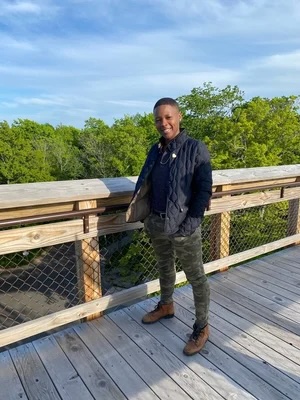
About Liv Furman
Liv Furman, PhD, is a Black nonbinary womanist artist, educator, curator, and researcher currently a Postdoctoral scholar in the Department of African American and African Studies and Assistant Project Director of the Quilt Index's Black Diaspora Quilt History Project at MSU, on the ancestral, traditional, and contemporary Lands of the Anishinaabeg – the Three Fires Confederacy of Ojibwe, Odawa, and Potawatomi peoples. Their work explores the embodied knowledges and care-centered practices of Black womxn & gender expansive folx, and the ways these knowledges can help us reimagine liberatory spaces of education.
Connect
More Info
Hometown: Louisville, Kentucky
Fun Fact: “I used to direct a gospel choir in college. Shout out to Voices of Faith!”
Influential Text on Their Work: A Communion of the Spirits: African-American Quilters, Preservers, and Their Stories By Roland L. Freeman